
How Arrest Warrants Work in Greensville County
In Virginia, an arrest warrant usually begins with a complaint. A magistrate, judge, or other authorized judicial officer reviews it for probable cause. The paper that comes out names the accused, describes the alleged offense, and tells an officer to arrest the person and bring them before a court. Greensville County offers no public name-search page for active arrest warrants, so a third-party database will not settle the question either. OCIS can track down a related court case by name, case number, or hearing date, but it cannot confirm warrant status. The issuing court or official agency holds the real answer. When you call, ask which instrument issued and what the office can share publicly. Keep case details private, and do not post another person's location or court record for others to see.
Probable-Cause Review for a Greensville County Arrest Warrant
The complaint-and-warrant process comes from Virginia Code § 19.2-72. A complaint goes to a magistrate or another authorized judicial officer for review. When process issues, it identifies the person or gives a description, states the offense, commands an appropriate officer to arrest, and sets a court appearance. Locally, Greensville County Court Services points to the magistrate channel at Southside Regional Jail, 244 Uriah Branch Way. The county page lists (434) 634-0853 and says magistrate services operate 24 hours a day. That line works for process or bail questions. It is not a promise of a walk-in public name search. Read Va. Code § 19.2-72 for the controlling process description, then contact the relevant office about a local case. The Virginia Magistrate Services map shows the regional district that covers Greensville County.
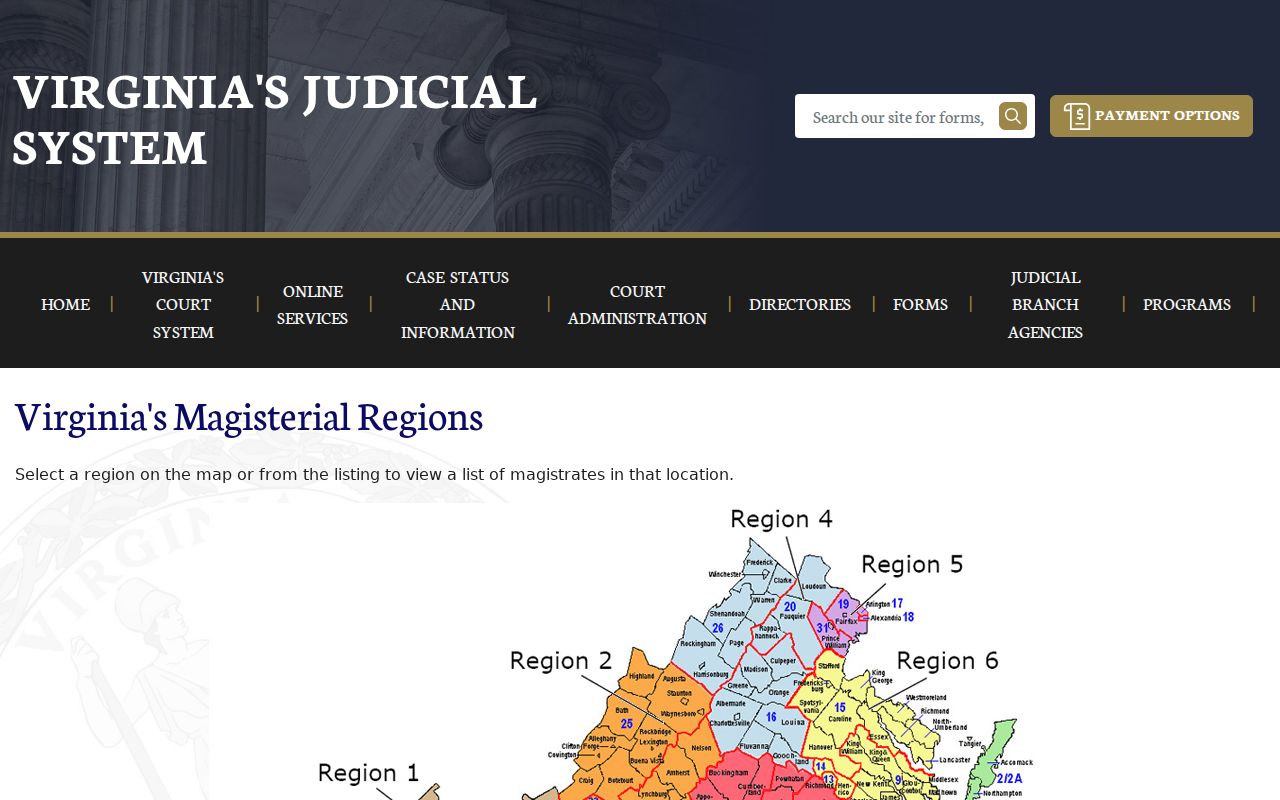
The regional map shows which office serves Greensville County. It does not show any individual warrant.
Arrest Warrants: What They Contain
A warrant paper may name the issuing authority, carry a case or form number, state the alleged offense, and show a signature, the directed officer, and the required court appearance. A service return or later court action may be stored separately. Greensville County publishes no sample warrant or local number format, so treat these fields as questions to ask, not a copied record.
| Issuing authority | Identify the judge, magistrate, court, and locality. |
|---|---|
| Case or form number | Use the number on the person’s own notice; no county pattern was verified. |
| Offense | Read the wording and Virginia Code section if present. |
| Directed agency | Ask which law-enforcement office received the process. |
| Return or later order | Confirm execution, nonservice, recall, or next hearing with the proper custodian. |
Greensville County’s Magistrate and Court Route
The magistrate reviews probable cause and, after an arrest, may admit a person to bail or commit them to jail. From there, the court level matters. General District Court hears misdemeanors and felony preliminary hearings, Circuit Court handles felony trials and its own court records, and JDR covers juvenile and family matters with tighter access rules. The court named on a notice tells you where to route a question. In Greensville County, Circuit Court Clerk Linda B. Edwards sits at 337 South Main Street, phone (434) 348-4215. The combined General District and JDR clerk is at 315 South Main Street, phone (434) 634-5400, and county materials also list (434) 348-4226. A clerk can pull a case file but does not decide probable cause. Check the official county Court Services information before you visit.
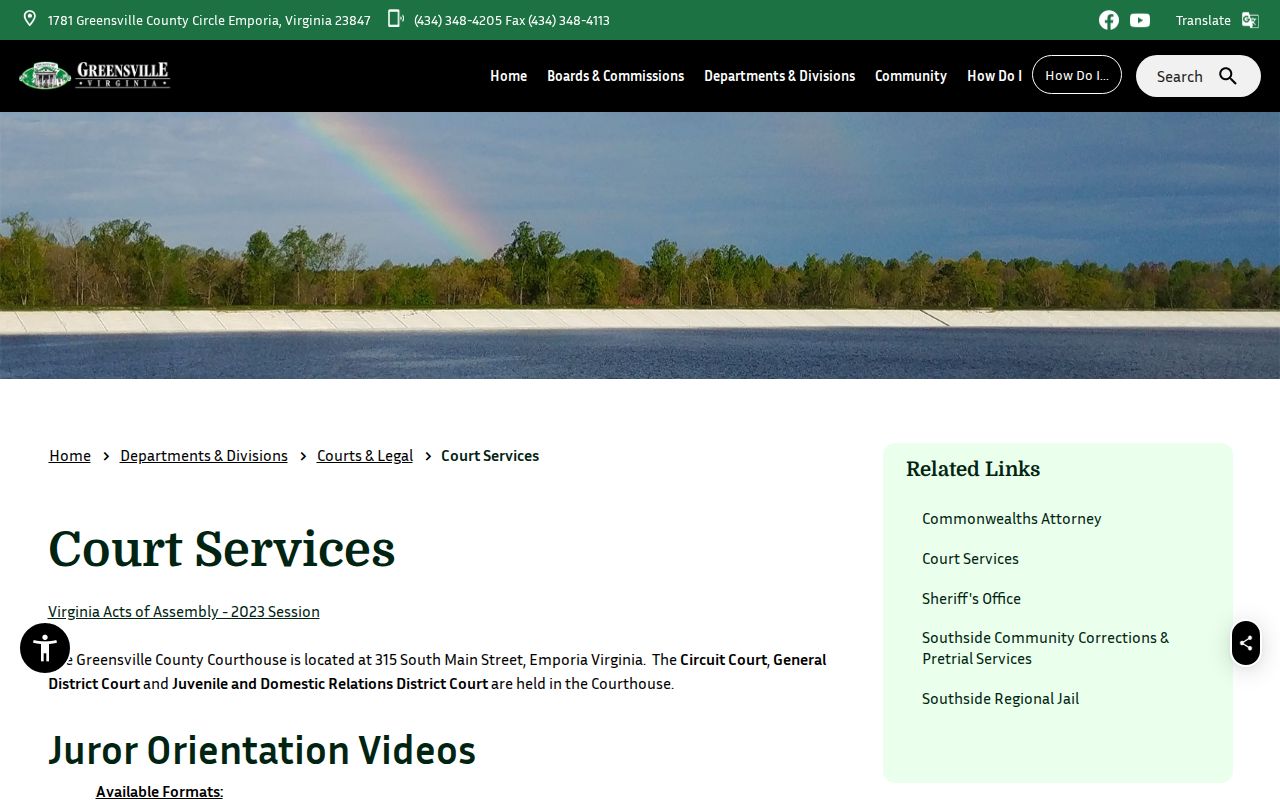
Separate offices use different addresses on the shared Emporia court campus.
How Warrants Get Served in Greensville County
The Greensville County Sheriff's Office patrol page says deputies serve criminal and civil warrants, make arrests, and guard the courthouse. That is an operational role, not a public warrant search. For a service question, the sheriff's contact page lists Communications at (434) 348-4200. Staff may limit what they can confirm. Service and record custody sit in different hands. A court issues process and keeps its filings, the serving agency records execution or return, and a regional jail handles booking. A jail entry will not show every piece of outstanding process, and a call to the sheriff cannot replace the issuing clerk's case record. GCSO's patrol page describes warrant service and patrol duties.

Check the Greensville County sheriff's current contact page for how warrant service gets routed.
Arrest Warrants, Summonses, and Bench Warrants
These terms point to different process. An arrest warrant commands an officer to take a person into custody after probable cause. A summons generally directs an appearance without that immediate arrest command. A capias or bench warrant can follow a missed court obligation. The issuing document and later orders control what applies.
| Document | Function | Local confirmation |
|---|---|---|
| Arrest warrant | Arrest and bring the person before court | Ask the issuing court or serving agency |
| Summons | Give notice to appear | Use the court and date printed on it |
| Capias or show cause | Address a missed appearance or alleged noncompliance | Ask the court what appearance is required |
A search warrant is not an arrest warrant. It covers a described place, person, or item and follows a separate access rule in Greensville County courts.
Greensville County Has No Public Arrest Warrant List
Greensville County publishes no official public arrest-warrant roster or status dashboard on its sheriff pages. OCIS does not offer a statewide public warrant list. Virginia State Police criminal-history requests give no live warrant confirmation either. A public case result can also be incomplete for a warrant question, especially if the record is sealed, juvenile, newly entered, or held elsewhere. Ask the issuing court what it can confirm and whether a recall or return has been recorded. A blank result is not proof that no warrant exists.
Search Warrants Are Different in Greensville County
Search warrants in Greensville County work differently from arrest warrants. One lets officers search a named place and seize described evidence; it does not direct an arrest. Virginia Code §§ 19.2-52, 19.2-54, and 19.2-56 govern probable cause, affidavits, sealing, and execution timing. The affidavit rule matters most here. Under § 19.2-54, an affidavit becomes open to public inspection after execution or 15 days, whichever comes first, unless the court seals it. That 15-day figure trips people up. The 15-day rule in § 19.2-56 applies only to an unexecuted search warrant, so an arrest warrant does not expire on that clock; the official Virginia statute spells out the affidavit rule.
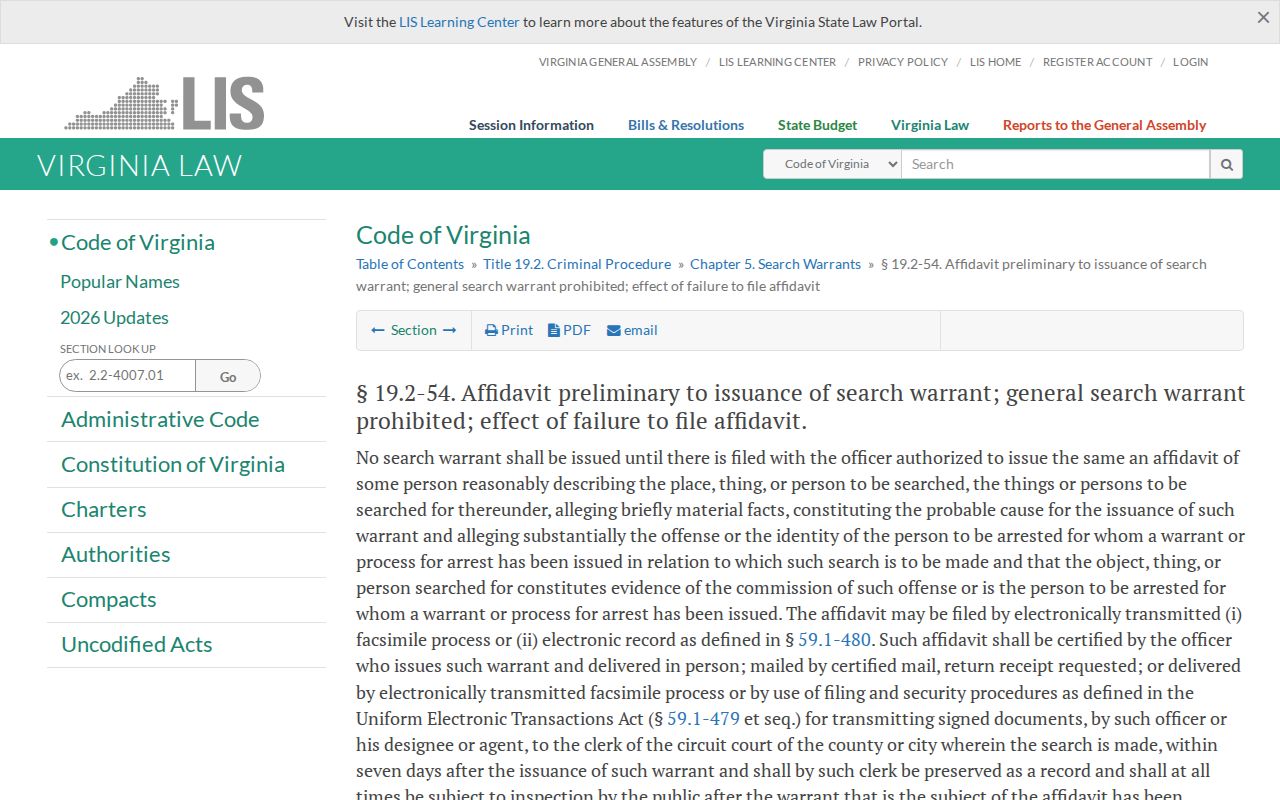
Don't stretch one rule to cover the other. Disclosure rules for search warrants answer no arrest question. The EDVA release about an Emporia case shows a federal prosecution in Greensville County built on local law-enforcement work, not a warrant roster or a status record.
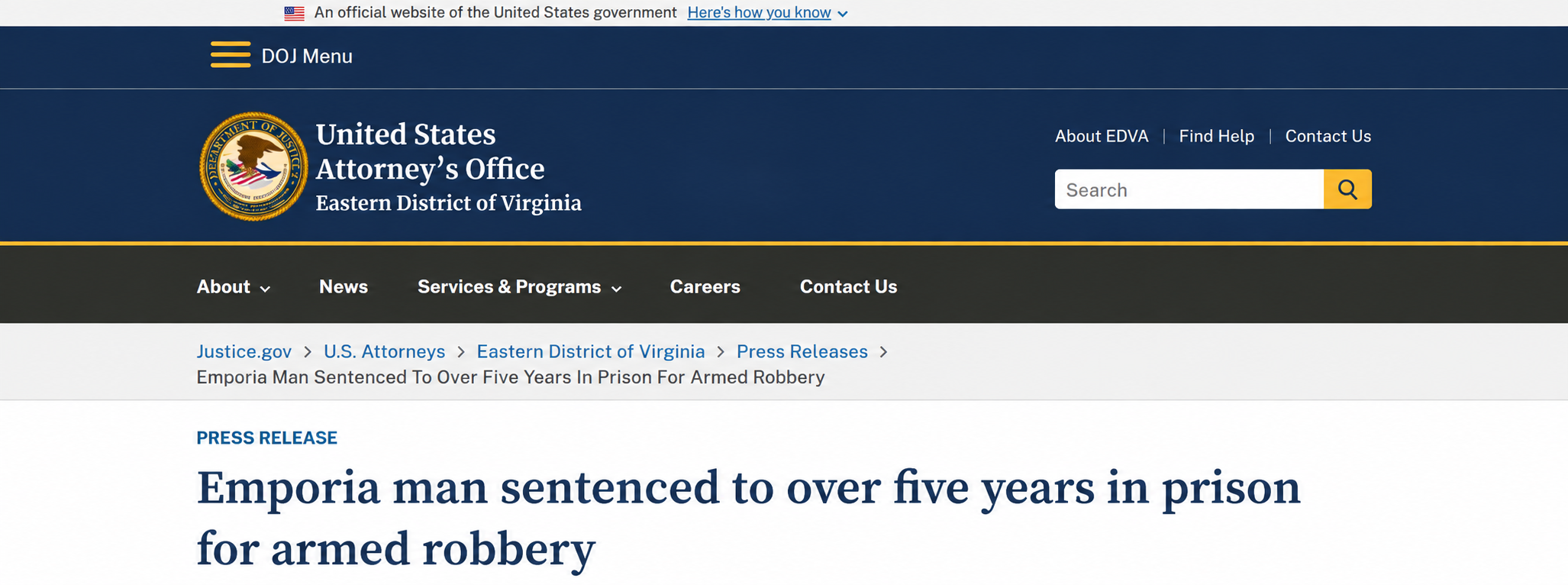
That federal article describes a past prosecution. For anything current in Greensville County, use the court named on your own notice.
Greensville County Arrest Warrants, Bail, and Next Steps
Verify the issuing court first. A possible warrant in your own name calls for careful checking before any move, and a Virginia criminal-defense attorney can advise you on surrender, a hearing, bond, or a motion. If you have counsel, start there. Greensville County publishes no county-wide bond schedule, payment hours, surrender calendar, or recall form, so ask the court or the magistrate what step is required and where a bond condition is addressed. A judicial officer sets conditions by case. Hold on to your paperwork. Receipts, appearance records, release orders, and recall orders all matter, because a phone call, an online payment, or a third party's promise does not end the process in Greensville County.
Before travel: Call the issuing court or get legal advice about the correct appearance and surrender route for your case.
Handling an Arrest Warrant in Your Name
Use contact details straight from the document itself or the Greensville County court's own page. Give only what's needed to route your question. Then ask which record confirms the current warrant status and how to obtain a copy. Family can help organize papers. Still, the clerk may limit what can be discussed with someone else on your behalf. Never contact alleged witnesses or post a person's location. Federal process is different. Greensville County offices cannot clear federal cases, and the county sits in the Richmond Division of the Eastern District of Virginia, where federal matters move through separate court and law-enforcement channels.